Official opening
20.03.2026
19:00h - Theatre Hall
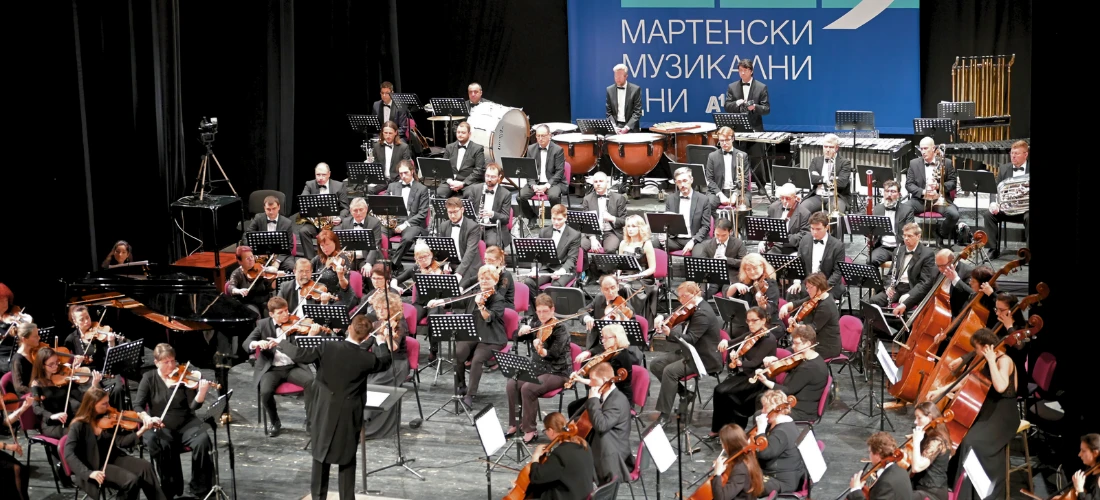
RUSE PHILHARMONIC ORCHESTRA
Conductor EMIL TABAKOV
Soloist AURELIEN PASCAL cello
| Date: |
|---|
| 20.03.2026 |
| (Friday) |
| Time: |
| 19:00 h. |
| Location |
| Theater Hall |
| String Quartet: |
|---|
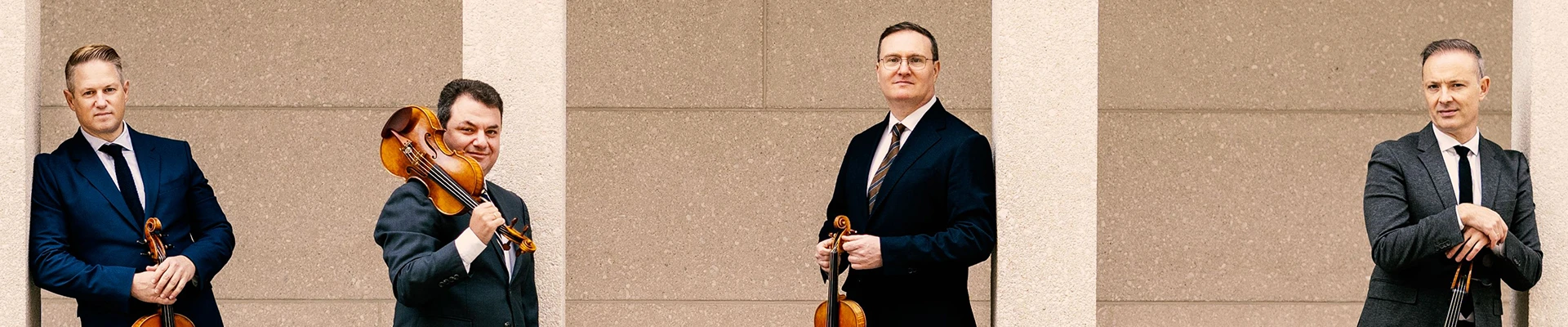
| Jerusalem String Quartet |
| Program: |
|---|
J. Haydn - String quartet Op.76, №4 |
L. Janacek - String quartet №1 |
L. V Beethoven - String quartet №13, Op. 130 |
A balance between technique and emotion, between tradition and modernity—this is the strength of the Jerusalem Quartet. The ensemble is among the leading chamber groups on the world music scene, captivating audiences with its warm, human sound, exceptional balance, and profound interpretations of both classical and contemporary repertoire.
From the stages of Carnegie Hall, the Berlin Philharmonie, and Wigmore Hall to the most prestigious festivals worldwide, the musicians enchant listeners with crystalline tone and expressive artistry. Among their many accolades are the Diapason d’Or and the BBC Music Magazine Award for Chamber Music.
Their projects for the Harmonia Mundi label include an exploration of Jewish music in Central Europe between the wars, featuring soprano Hila Baggio, as well as the second volume of their cycle of Bartók’s string quartets.
The musicians will present three exceptionally powerful works by Haydn, Janáček, and Beethoven.
Haydn’s String Quartet Op. 76, known as the “Sunrise,” is famous for its opening, in which the first violin unfolds a graceful ascending motif—the “sunrise.” In this work, the composer masterfully plays with rhythm, juxtaposing minor tonalities with lively, buoyant motion. The quartet transforms ingeniously simple ideas, moving from a radiant opening through a melancholic slow movement and concluding with joyful, folk-inspired motifs.
Janáček’s String Quartet No. 1, titled The Kreutzer Sonata, is a complex and emotionally charged piece written in just nine days at the end of 1923. Inspired by Leo Tolstoy’s novella of the same name, it is a psychological drama intertwining themes of love, desire, suffering, and ultimately murder. Janáček creates a four-movement work that largely rejects traditional forms such as sonata or rondo. Instead, the music is built through the continuous development of short, insistent motifs and fragments, using a “montage” compositional style. The quartet employs more than fifty tempo changes, reflecting unstable emotional states and speech-like instrumental inflections.
The program also includes Beethoven’s String Quartet No. 13, a groundbreaking six-movement work for its time, which follows a familiar Beethovenian overall structure but with the distinctive feature of two pairs of inner movements placed at the center. It is renowned for its emotional depth, stylistic contrasts, and unique formal design.
Beethoven originally composed the so-called Great Fugue as the quartet’s finale—a dense and challenging composition that was critically received in its own time. He later wrote an alternative finale, which became his final completed composition before his death.
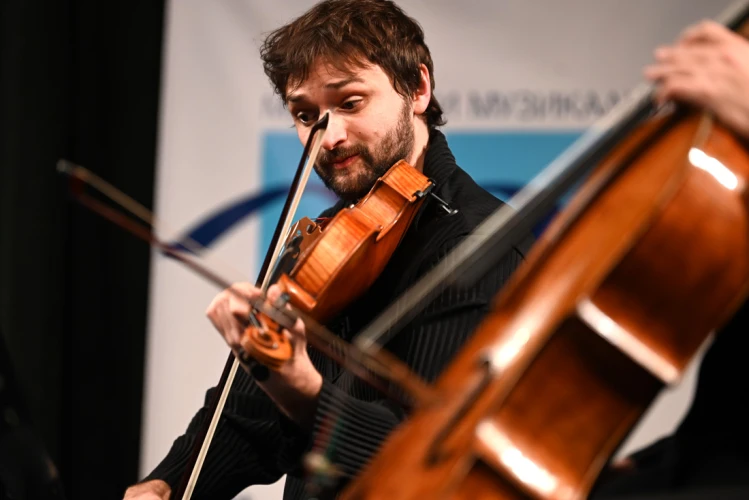
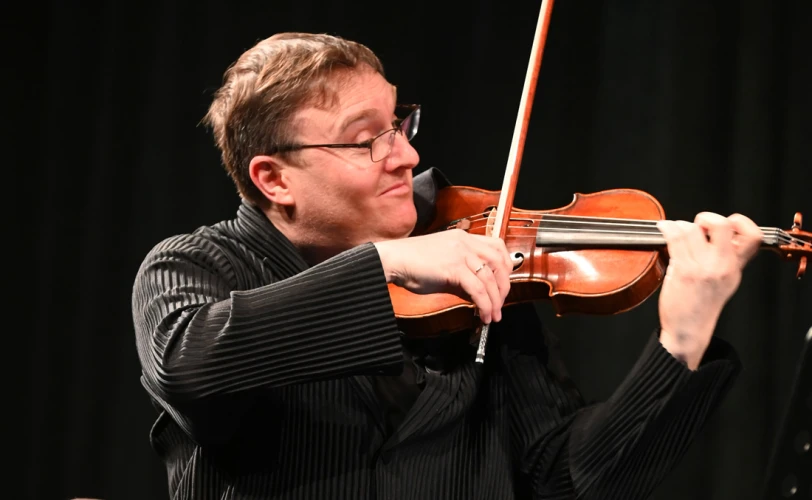
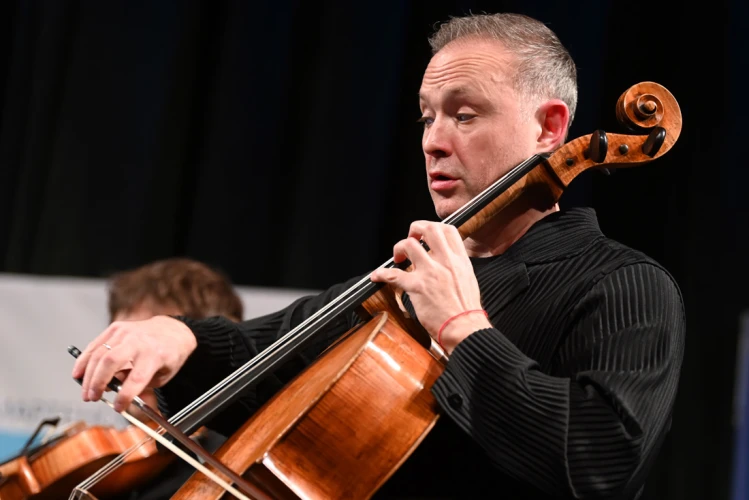
Performers:
Alexander Pavlovsky - first violin
Sergei Bresler - second violin
Mathis Rochat – viola
Kyril Zlotnikov - cello

19:00h - Theatre Hall
RUSE PHILHARMONIC ORCHESTRA
Conductor EMIL TABAKOV
Soloist AURELIEN PASCAL cello
19:00h - Theatre Hall, Europe Hall
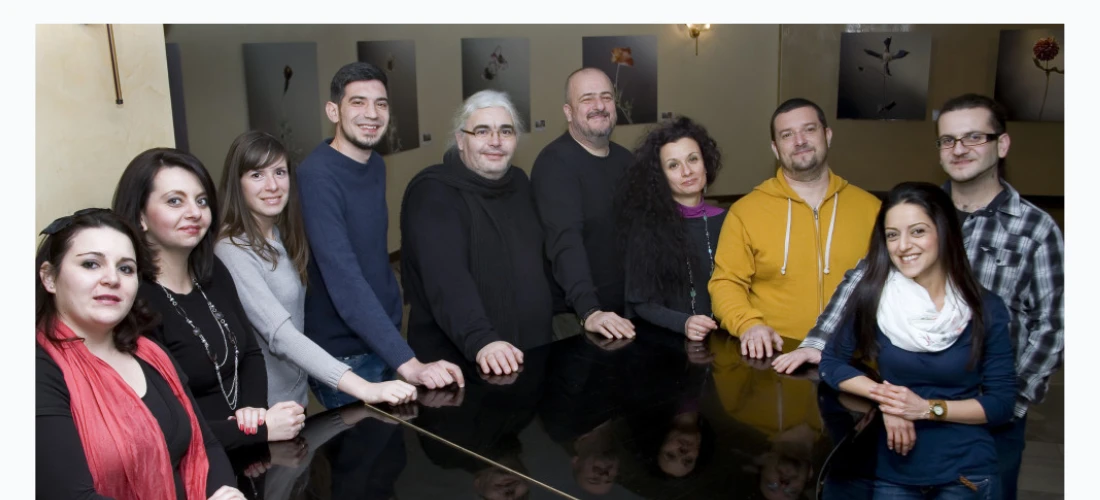
GLI ACCORDATI Vocal Ensemble
Conductor DRAGOMIR YOSSIFOV
Programme:
J. Haydn – Nine Songs
C. Gesualdo – Five Madrigals

18:00h - 6 Borisova Str.
Exhibition of Ruse Society of Artists
19:00h - Europe Hall
RUSE PHILHARMONICS
Conductor DIMITAR KOSEV
Soloist GIORGI GIGASHVILI пиано
J. Brahms – Piano concerto №1, op.15
А. Dvorak – Symphony №8, op.88




_1626953901-thumb.webp "Radio Puse")
_1626954401-thumb.webp "Вестник УТРО")


_1626957078-thumb.webp "НУИ \"Проф. Веселин Стоянов\" - Русе")

_1626958604-thumb.webp "ME Ruse Art")




_1626962643-thumb.webp "Happy Bar & Grill")













_1627399883-thumb.webp "Аtlas Taxi")